The Elk of Michigan -a story of up and down and back up again
Like many Midwestern states, Michigan saw its elk herd dwindle to non-existence in the latter part of the 19th century. A common misconception is that the abundance of game was far greater when grandma or grandpa were alive, but with
elk as with many other animals hunted for meat and/or sport, this simply is not the case. In many cases, the re-introduction of extirpated species has come by transplanting animals from other regions.
Missouri is going through this process now with its elk herd. Elk were removed from the landscape in Missouri at about the same time as Michigan. It has taken the state much longer to get around to bringing them back.
Michigan began the process of reintroducing elk to the state in 1918 when seven animals were placed in the Wolverine area. By 1960, those seven had turned into a herd of 1,500. Unfortunately, poaching and habitat loss took a terrible toll on the herd until it was back in the danger zone.
By 1975, the herd had dwindled to 200 animals and their future was seriously a question. An odd savior turned out to be oil exploration in a portion of the elks' range - Pigeon River. The focus on the environmental issue pertaining to the exploration in the late 1970's got folks re-focused on keeping a viable elk herd as a part of the natural environment.
By the mid 1980's, the herd had grown once more to a sustainable number - 800 to 900. That is where it stands today, and Michigan even has allowed for a small number of the herd to be harvested each year. One of the goals is to manage the impact the elk herd has on agriculture and other parts of the environment. The limited hunt helps with these management efforts.
Recently, the Rocky Mountain Elk Foundation in conjunction with local partners
including the Michigan DNR and Cadillac Career Technical Center have established a series of elk viewing stations. According to Michigan DNR, an elk viewing station, "is an information board with elk history, biological facts and management information, placed in an area where elk may be seen. The station also includes a map indicating other areas where elk can be frequently found. Roads are named and GPS points are listed to help navigate parts of the Pigeon River Country State Forest and nearby areas."
For more info on viewing Michigan elk, visit www.michigan.gov/elk.

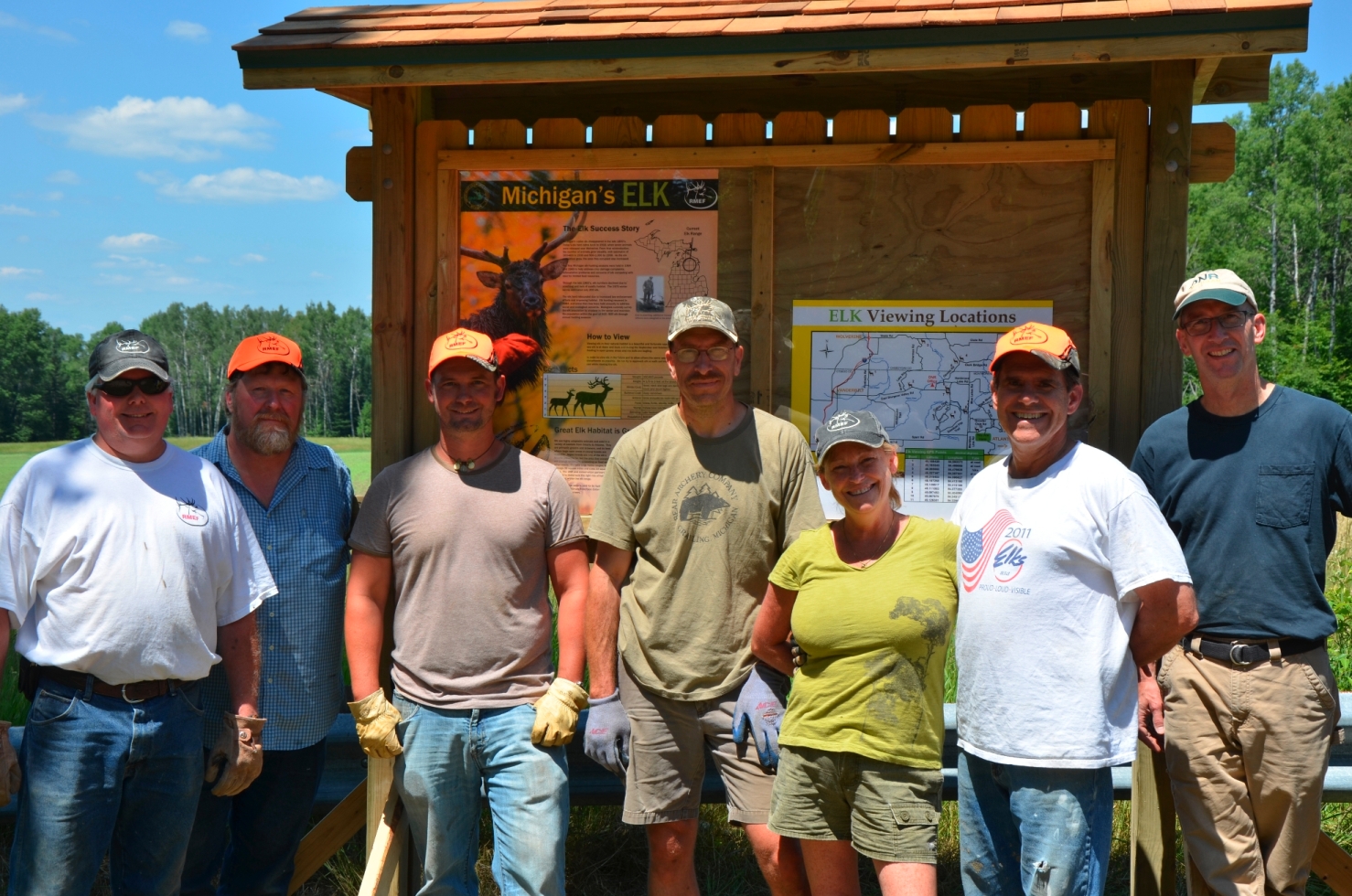 |
| An elk viewing station was recently installed in northeast Michigan. From left to right: Doug Doherty, Rocky Mountain Elk Foundation (RMEF); Joe Valentine, DNR; Mark Monroe, DNR; Dan Collard, RMEF; Scott Wheelden, RMEF; Meg Wheelden, RMEF; Brian Mastenbrook, DNR |
Missouri is going through this process now with its elk herd. Elk were removed from the landscape in Missouri at about the same time as Michigan. It has taken the state much longer to get around to bringing them back.
Michigan began the process of reintroducing elk to the state in 1918 when seven animals were placed in the Wolverine area. By 1960, those seven had turned into a herd of 1,500. Unfortunately, poaching and habitat loss took a terrible toll on the herd until it was back in the danger zone.
By 1975, the herd had dwindled to 200 animals and their future was seriously a question. An odd savior turned out to be oil exploration in a portion of the elks' range - Pigeon River. The focus on the environmental issue pertaining to the exploration in the late 1970's got folks re-focused on keeping a viable elk herd as a part of the natural environment.
By the mid 1980's, the herd had grown once more to a sustainable number - 800 to 900. That is where it stands today, and Michigan even has allowed for a small number of the herd to be harvested each year. One of the goals is to manage the impact the elk herd has on agriculture and other parts of the environment. The limited hunt helps with these management efforts.
Recently, the Rocky Mountain Elk Foundation in conjunction with local partners
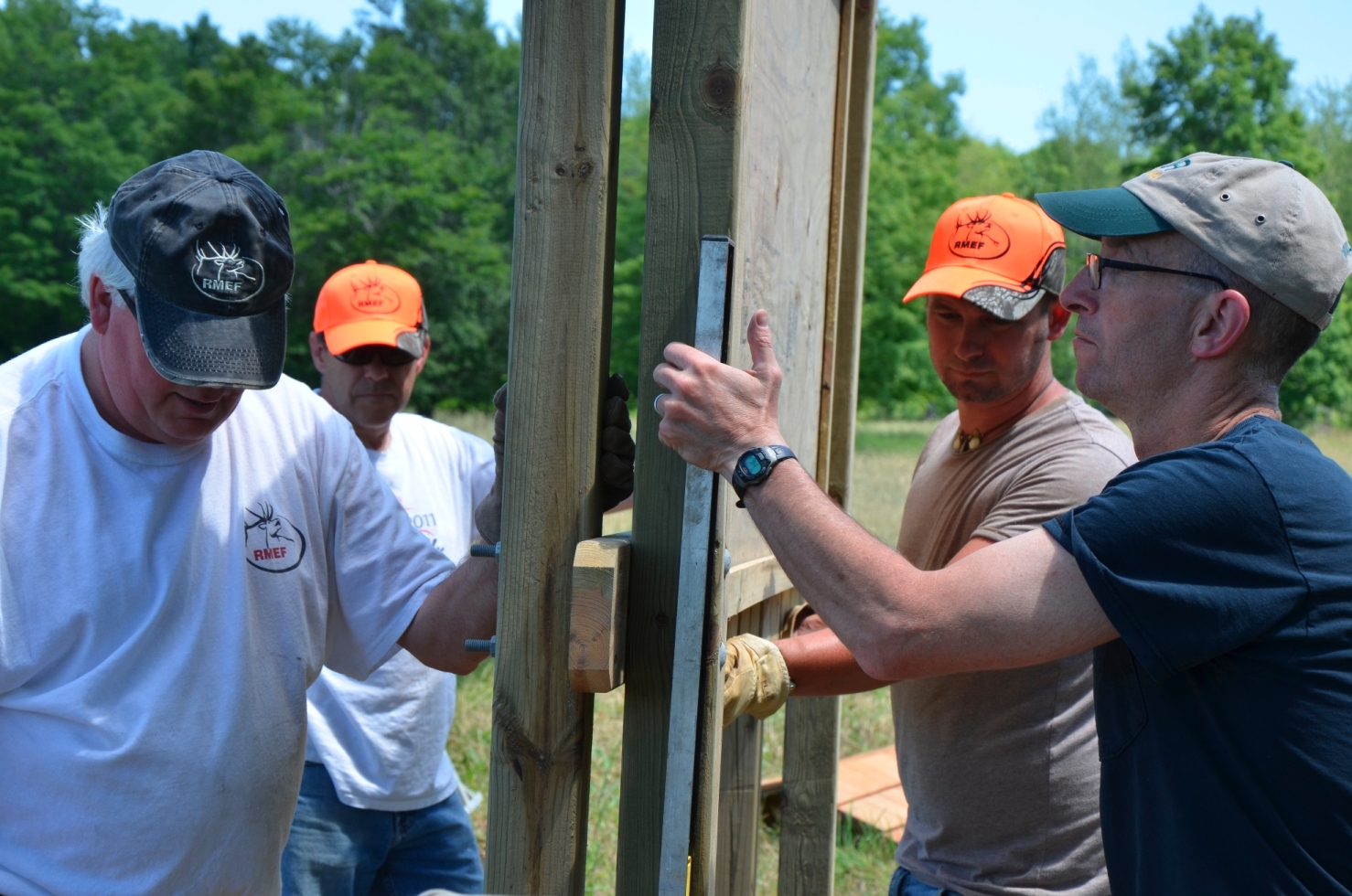 |
| Volunteers make sure the elk viewing station is straight before they set it permanently. |
For more info on viewing Michigan elk, visit www.michigan.gov/elk.


Comments
Post a Comment